We use cookies to enhance your browsing experience and analyze site usage.
We use cookies to enhance your browsing experience and analyze site usage.
Cookie Policy


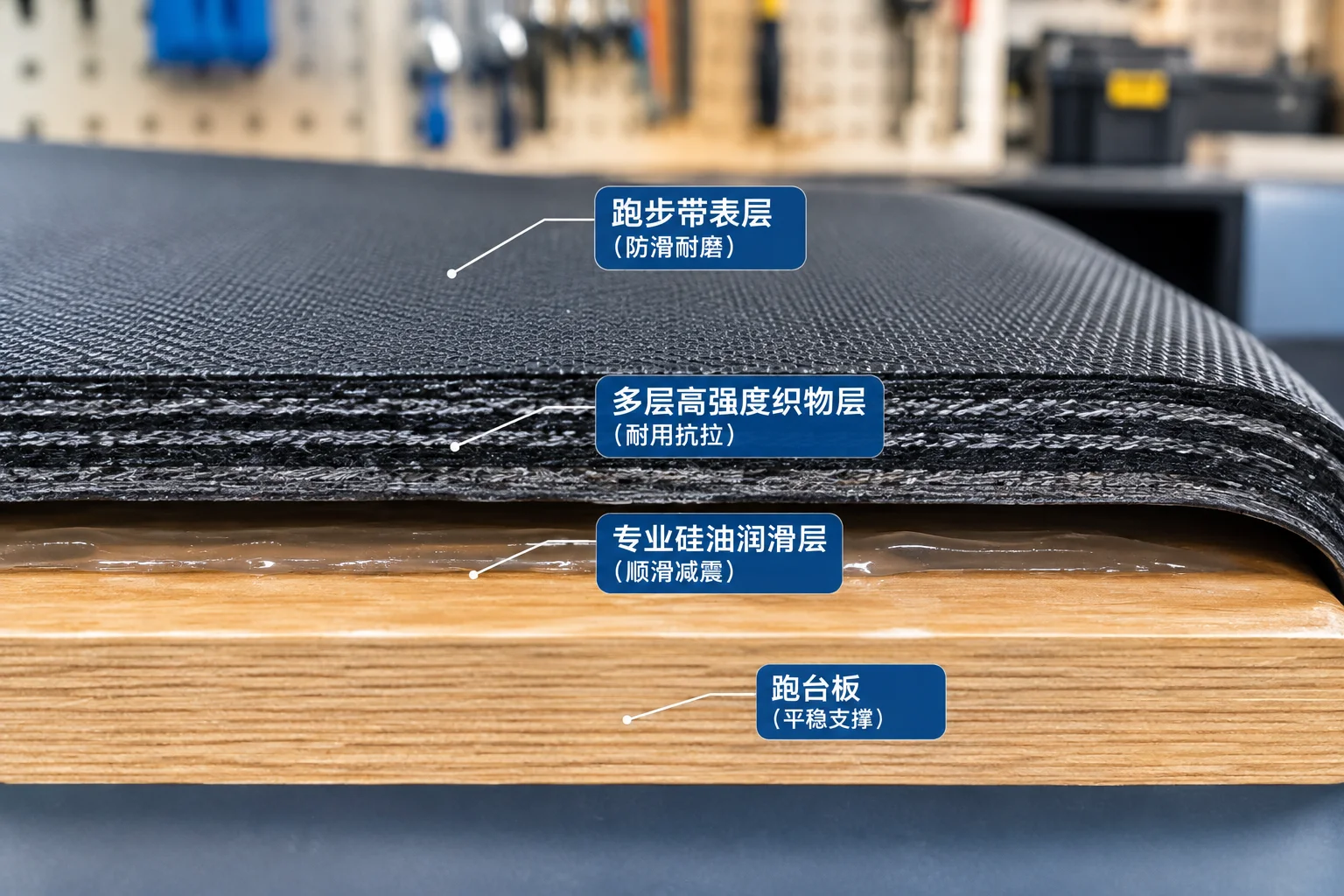
Every time you step onto a treadmill, your feet strike a complex sandwich of engineered fabrics and composite wood. Most runners focus entirely on the console and motor, ignoring the literal foundation beneath their shoes. Understanding this hidden assembly changes how you maintain your machine and prevents costly breakdowns.
Ignoring basic wear on your running surface leads to dead motors and warped boards. Knowing what happens inside the machine keeps your joints safe and your equipment functioning for years without unexpected failures.
The running belt looks like a simple rubber loop, but manufacturers build it with multiple distinct layers. The top layer provides grip and resists friction from your rubber-soled shoes, while the middle layer uses a flexible weave of polyester or cotton to maintain shape. The bottom layer features a low-friction fabric that glides across the wooden deck below.
Constant friction wears down that bottom layer over time. When the fabric loses its slick texture, the motor works twice as hard to drag the loop forward. Choosing a quality replacement belt with a strong internal weave prevents stretching and reduces electrical load on the drive system.
Beneath the belt sits the deck, usually made from high-density fiberboard or laminated plywood designed to flex slightly with every stride. This controlled bounce absorbs the shock that would otherwise travel straight into your knees and ankles during a fast interval session.
Manufacturers coat the top face of this board with a specialized low-friction wax or phenolic resin. Over months of heavy impact, that protective coating wears away in the center where your feet land most often. Once the wood becomes exposed, friction spikes dramatically and turns the running surface into a brake.
Friction remains the primary enemy of any moving fitness machine. Without adequate lubrication between the belt and the deck, heat builds up rapidly and melts the synthetic fibers from the inside out.
Adding too much fluid creates a sliding hazard and gums up the internal rollers, while adding too little destroys the motor board. Balance is everything when maintaining proper glide.
Machines talk to you through sound, smell, and touch long before they stop working completely. A burning odor during a workout usually indicates friction overheating the belt backing against a dry deck. Squeaking noises point toward misaligned rollers or dry bearings near the front motor housing.
Fraying edges mean the loop wanders sideways and rubs against the side rails. Inspect the underside of the fabric every few months to catch micro-cracks before they turn into complete tears.
Taking care of these components requires no engineering degree, just regular attention and the willingness to look beneath the surface. Your joints and your motor will thank you for keeping everything clean, lubricated, and properly aligned.




Most home treadmills need lubrication every three to six months depending on usage frequency. Check beneath the running belt to feel if the surface is dry before applying silicone lubricant.
A slipping belt usually means the tension bolts at the rear rollers are too loose, or the inner fabric has stretched over time. Adjusting the bolts evenly on both sides fixes this.
Never use vegetable oil or petroleum-based products. They attract dust, gum up the mechanics, and can catch fire due to friction heat. Always use 100 percent silicone lubricant designed for treadmills.
Look for visible fraying at the edges, cracking on the underside, persistent static shocks, or a burning smell during your run. These signs indicate the material has worn out completely.




 ViewVexyn
Comments
Oleksandr Bondarenko
Quality Inspector
Ivan Melnyk
Service Manager
Kateryna Boyko
Parts Consultant
Yuliia Kravchenko
Support Specialist